

Now that the dust has settled on Formula One’s statement show to commemorate the series’ 75th anniversary, teams will be looking forward to the far more meaningful preseason test in Bahrain later this week.
Yet, the event at the O2 Arena on 18th February emphasised that Formula One is no longer just a sport that does its talking on the track. It is now a lifestyle and entertainment property looking to expand its global influence beyond traditional fans.
Change is often unwelcome in the world of Formula One, so some skepticism towards the event was inevitable. Those harbouring strong doubts about the true purpose of the extravaganza likely saw little to change their minds. Ultimately, it boiled down to revealing the 2025 colour schemes, rather than the cars themselves.
But ‘F1 75’ must be applauded for the achievement it was, including getting all ten teams to attend. As Red Bull team principal Christian Horner remarked prior to the night’s proceedings, “it’s difficult to get most teams to agree what day of the week it is”.
Having had time to reflect on the event as a whole, BlackBook Motorsport picks out the key takeaways from Formula One’s big night in London.
F1 is slowly learning how to put on a consumer-facing event
Ably fronted by comedian Jack Whitehall, the show leaned heavily into an entertainment format. Whitehall ensured the energy remained high, poking fun at various figures from Formula One and the wider world of entertainment. In fact, it was strange to see the series not take itself too seriously.
Some teams clearly got the memo better than others when it came to unveiling their cars, but Formula One showed it is more than capable of straddling the line between entertainment and sport.
Many learnings will have been taken from the Las Vegas Grand Prix, which was the first instance of Formula One promoting an event itself. The series’ chief commercial officer Emily Prazer should also be commended for taking risks that have advanced the sport commercially, as she was a key figure for both F1 75 and the unprecedented race on the streets of Vegas.
The choice of musical guests, however, felt like a missed opportunity for a sport trying to position itself as modern and forward thinking.
Aston Martin and Racing Bulls show how it’s done
The two best reveals of the night went to teams not usually associated with on-track success.
Aston Martin made their intentions clear with a brand takeover of North Greenwich station, with all possible advertising slots plastered with team imagery – they even had a cupcake stand situated next to the station exit for the O2.
On the night, Aston Martin leaned into their association with James Bond through a well-produced promotional video that saw the drivers in the midst of a high-speed boat chase. This led to Fernando Alonso and Lance Stroll revealing themselves in the crowd, which was easily the most creative introduction of the night. There was also an appearance from Nigerian singer Tems, who introduced the car with a live performance.

Racing Bulls win the unofficial award for best livery reveal of the night (Image credit: Getty Images)
But this writer believes the best reveal of the night was the light-hearted video from Racing Bulls. Comedian Munya Chawawa was brought on board to drive home the message of the team’s full name, Visa Cash App Racing Bulls.
The self-awareness to riff on the clearly ridiculous team name was refreshing, but this also maximised the brand awareness of Racing Bulls’ title sponsor in a unique way thanks to the constant repetition throughout the introductory clip. It also helped that the team unveiled the best-looking car of the night, even if Alonso disagreed.
The parent Red Bull team should also be singled out for a 2025 reveal that leaned heavily into car culture and featured an appearance from iconic South London chicken shop Morley’s. It was one of the few reveals that understood the target audience of this event.
Alpine and Sauber suffer missteps, but for different reasons
From teams that clearly understood the event to one that obviously did not: Alpine.
The behind-the-scenes turmoil at the Enstone-based outfit has been well documented, but Alpine’s car reveal was indicative of a team that has suffered from muddled decision making in recent years.
Brian Tyler, the composer behind Formula One’s official theme tune, was drafted in to perform a DJ set that felt a lot longer than its five or so minutes. To make matters worse, the song Tyler performed seemed to be dragged from the height of dubstep’s popularity in the early 2010s.
When the driver pairing of Pierre Gasly and Jack Doohan was eventually revealed they spoke for less than one minute combined, with team principal Oliver Oakes’ expectations for improving on last season’s performance reduced to one sentence: “Well I guess we need to just rise higher, don’t we?”.
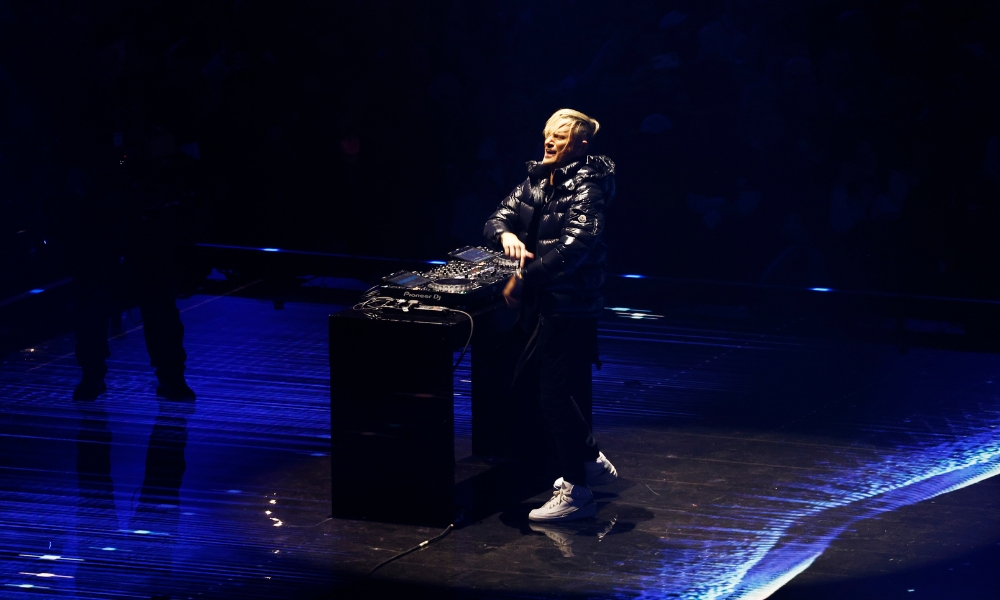
Brian Tyler’s introductory DJ set for Alpine felt like one of the only true missteps of the night (Image credit: Getty Images)
It should be noted, though, that the drivers and team principals being reduced to a footnote was a theme for the duration of the event.
For Sauber, the issues were more subtle, but the sight of title partner Stake’s logo plastered all over their reveal while none of the hosts referred to the team under that name was somewhat jarring.
Stake recently gave up its licence to operate in Great Britain following the launch of a Gambling Commission investigation into a social media video featuring an adult actress. The video, where the adult actress talked about having sex with “barely legal 18-year-olds” at Nottingham Trent University, displayed the Stake logo across the screen.
FIA and Christian Horner compete to be F1’s pantomime villain
There were two defining moments of fan negativity during the event, one of which was fairly surprising.
It was no shock to see Christian Horner roundly booed when he took to the stage to introduce Red Bull’s livery for this season. Seemingly comfortable in his role as Formula One’s pantomime villain, Horner did find himself having to pause on occasion when the boos got too loud.
The 51-year-old was placed under investigation last year following an accusation of ‘inappropriate behaviour’ made against him by a female colleague. Horner always emphatically denied the claim and was eventually cleared of wrongdoing by an independent investigation.
The fans in attendance, a lot of whom were women, have evidently not forgotten the incident.
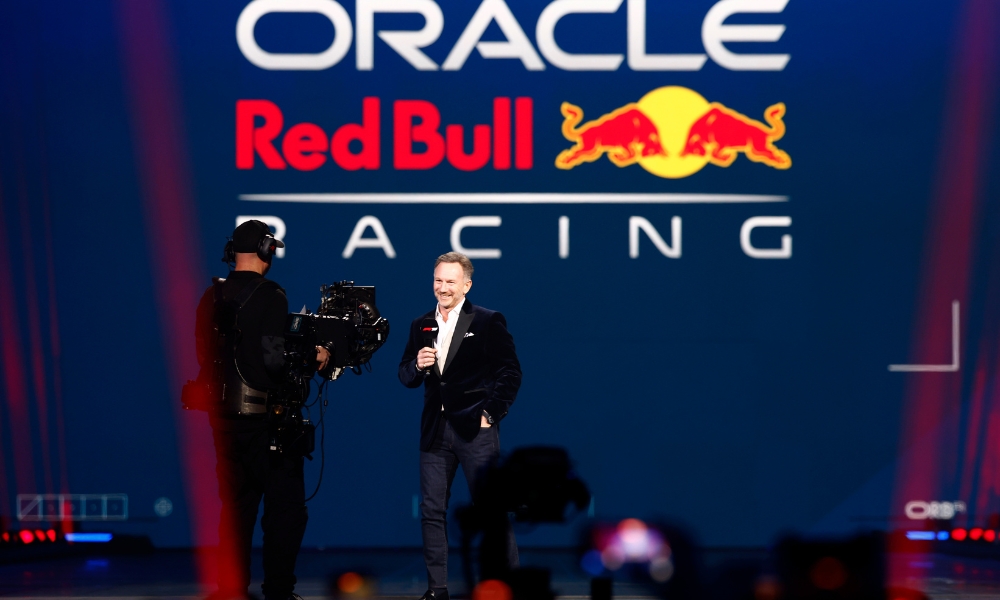
Red Bull’s Christian Horner took to the stage alone to introduce the team’s 2025 livery, joining Williams’ James Vowles as the only team principals to do so (Image credit: Getty Images)
Earlier in the night, the sight of the International Automobile Federation (FIA) logo coming up on screens around the venue was enough to also prompt a chorus of boos. This might have been an event targeted at casual fans, but the attendees still made their feelings clear towards the motorsport global governing body.
While it’s long overdue that longstanding fans stop looking down their noses at the new era of motorsport followers – or the ‘Drive to Survive fans’ – the point here is the precarious position the FIA now finds itself in.
At the end of last year, the FIA approved a controversial set of rule changes that granted its president Mohammed Ben Sulayem greater control over the organisation.
In short, the FIA ethics committee will now only carry out an initial assessment to determine whether an in-depth investigation is necessary.
Ben Sulayem and the FIA president of the senate, Carmelo Sanz De Barros, will have the power to decide whether to take further action on any ethics complaints.
Ben Sulayem was placed under investigation for allegedly interfering with last year’s Saudi Arabian Grand Prix and attempting to block the certification of the circuit in Las Vegas. Both allegations were dismissed.
Related posts
- Breaking down F1’s sponsorship portfolio ahead of the 2025 season
- F1 2024 in numbers: Consistent viewership, strong attendances, and a boom in commercial partnerships
- Where is the next new F1 race going to happen?
- Mics Out podcast | Celebrating 75 years of F1
F1 Academy has already made a tangible impact
A tribute to the work being done by F1 Academy was a welcome break from the largely unimaginative car reveals and it received a notable cheer from the crowd.
A study from Nielsen Sports found that 41 per cent of Formula One fans are women and the fastest growing fanbase is women aged 16 to 24. It wouldn’t be a surprise if the male-female split at last week’s event was closer to 50/50.
With managing director Susie Wolff in attendance alongside select drivers from the upcoming season of F1 Academy, there was a much more diverse feel to an event that threatened to be too male dominate. The on-stage presence of Laura Winter and Ariana Bravo also helped in this regard.
It says plenty about the strides being made in Formula One that F1 Academy received one of the biggest cheers of the night. The upcoming Netflix series should provide an even greater spotlight to the series and its drivers.
This will hopefully lead to a greater spread of diversity in the sport. Laura Müller will become the first female race engineer in Formula One this season, following in the footsteps of Red Bull’s principal strategy engineer Hannah Schmitz. Bernie Collins and Ruth Buscombe, who worked in similar roles at Aston Martin and Sauber, respectively, have moved on to careers in broadcasting.
But with this writer having sat through the pre-event press conferences for nine of the ten teams and heard zero questions asked by women to the drivers and team principals, there is still much work to be done.
Ferrari and Lewis Hamilton are a match made in heaven
The final takeaway – and probably the most obvious of the lot – is the sheer impact of Lewis Hamilton’s move to Ferrari.
The appearances of Charles Leclerc, Lando Norris and Fernando Alonso all received positive reactions from fans, as did the new Williams pairing of Carlos Sainz and Alex Albon, but none could compare with Hamilton.
The combination of an iconic team and a legendary driver will always resonate with fans, but even knowing this was not sufficient preparation for the noise when attendees got a glimpse of the seven-time world champion in red.
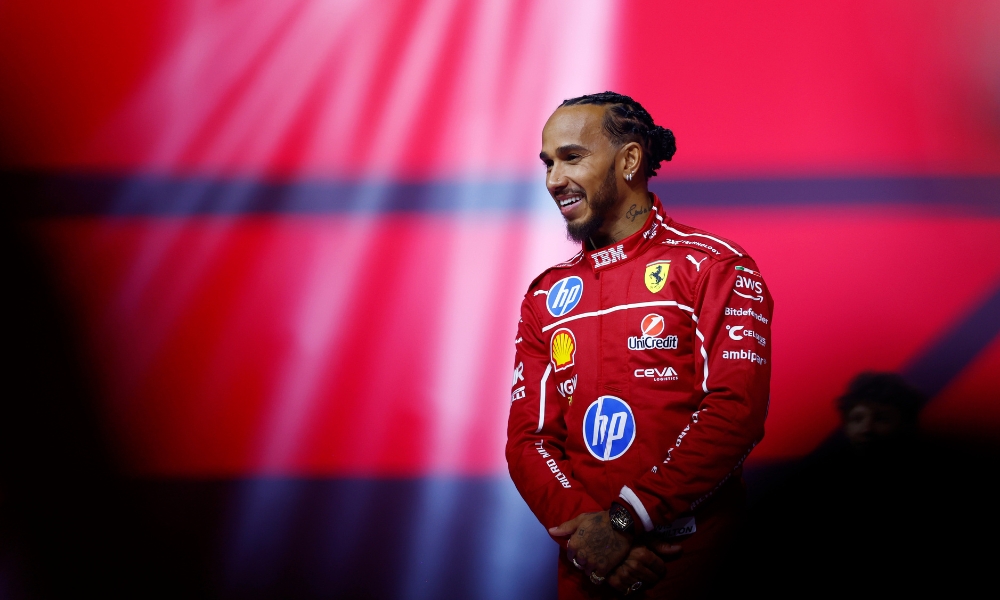
Lewis Hamilton will race for Ferrari in 2025 after 17 years with Mercedes-powered teams (Image credit: Getty Images)
Motorsport’s most marketable athlete in SportsPro’s 2024 list of the world’s 50 Most Marketable (50MM) athletes, Hamilton has the rare distinction of transcending the sport in which he competes.
The effect of Hamilton’s move was also underlined by Ferrari’s share price jumping more than ten per cent in the wake of the 40-year-old’s switch from Mercedes, with the Italian company’s value hitting almost US$7 billion.
And in the ten days since the Briton arrived at Ferrari’s headquarters in January, Ferrari was reportedly mentioned in more social media posts than in seven full months’ worth last year.
If Hamilton can make it eight world championships this year, cementing himself at the top of the series’ record books, then the fan reaction will be immeasurable.

Looking to unlock more exclusive insights and strategic connections in the motorsport industry?
The BlackBook Motorsport Forum is the destination that connects and inspires top decision-makers and leaders across global motorsport. Join us in London on 27th March 2025 to dissect the critical balance between on and off-track performance, exploring areas such as technical innovation, sustainability and commercial success. Discover more here.