Formula One has always been a platform to showcase new technologies, and it will be again when the 2026 regulations come into force.
Away from the introduction of active aerodynamics and lighter cars, a key area of evolution will be the engines. An integral part of those engines will be sustainable fuels, which will finally be rolled out after years of testing.
Formula One’s overall emissions are significant, largely because of logistics, which raises questions around whether sustainable fuels will have any material impact – especially considering about 0.7 per cent of the series’ emissions come from the cars themselves.
But it’s the relevance for road vehicles that’s most important in this instance. If its implementation is a success, sustainable fuels could then be rolled out to some of the two billion cars around the world in place of petrol and diesel.
A range of solutions – whether they be sustainable fuels or electric and hydrogen power – will be required to ensure the wider automotive industry is prepared for a more environmentally-friendly future. Formula One is hoping its drop-in fuel can be one of them.
An ‘entirely sustainable and circular’ solution
This focus has opened the door for companies exploring sustainable fuel technology to market themselves on the global stage. Take former McLaren, Mercedes, and Williams engineer Paddy Lowe, whose Zero Petroleum firm started a sponsorship deal with the Sauber Formula One team this season.
Using carbon dioxide from air and hydrogen from water, Zero developed and manufactured a whole-blend synthetic, non-biological fuel in a completely fossil-free process. It also opened the world’s first fully featured synthetic fuel plant near Oxford in the UK and has plans to build a commercial-scale plant that will begin production in 2026.
“The very important point is how [synthetic] fuels distinguish themselves from fuels generated from biological material, whether they be direct, such as wheat, corn, or soya, or whether they come from waste agricultural products, such as used cooking oil,” Lowe explains to BlackBook Motorsport.
“Synthetics are generated from green hydrogen, which is made by splitting water into oxygen and hydrogen using renewable electricity and carbon dioxide originally from the atmosphere.
“If you really want to substitute the fossil fuel industry with something entirely sustainable and circular, it will need to be from the synthetic solution, not biofuels.”
Another obstacle to the widespread adoption of biofuels is cost. Currently, it is far too expensive to produce biofuels on a global scale, whereas synthetic fuels will not suffer the same problem.
“Synthetic fuels will become as cheap as fossil fuels in as little as ten years,” Lowe predicts. “Beyond that they will become even cheaper, so it really is a game-changing solution for our industry.”
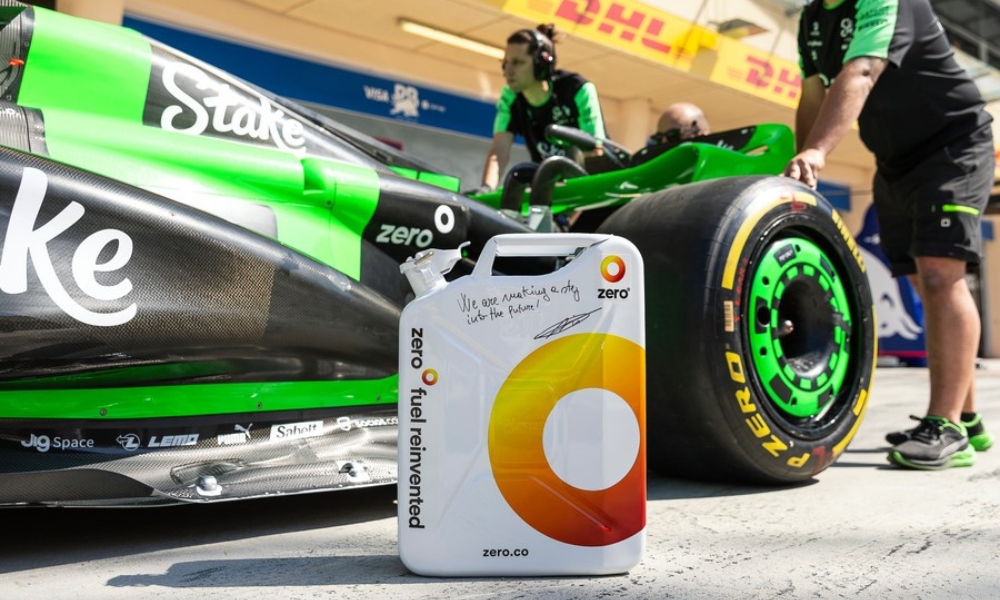
Zero Petroleum partnered with the Sauber Formula One team ahead of the 2024 season in a two-year deal
The environmental formula
In the short term, Formula One will allow the use of second-generation biofuels made from feedstocks, which Lowe explains is at “the very best end of things” when it comes to sustainability because they are waste products.
Teams will be able to choose between those biofuels and the synthetic alternative offered by companies like Zero, although it’s also worth pointing out that the Formula One engines from 2026 will not be reliant on these fuels alone. In fact, they will place an even greater emphasis on electrical power.
At a time when sustainable fuels are becoming more and more prominent, it might make sense to focus solely on the drop-in solution. But Lowe thinks more of an all-encompassing approach is necessary.
“I think it’s a good mix actually,” he says. “I do think a lot of the automotive solutions we’ll see in general will be hybrid. I think you need the liquid fuel for the density of the energy to store and the range that brings you, particularly in regions of the world that are not electrified.”
The hope is that this will have a knock-on impact on the overall emissions produced by the series’ logistical operation, which is the largest contributor to Formula One’s carbon footprint. As things stand, it would be difficult to call the series’ new fuel ‘100 per cent sustainable’ if the trucks and planes ferrying it around the world are polluting as normal.
But there has been progress in this area, particularly at Mercedes. The Brackley-based team are targeting 100 per cent biofuel logistics for the European leg of the 2024 season and have also invested in sustainable aviation fuel (SAF), which reduced air travel emissions by 21 per cent last season.
Why marketing is an obstacle
It’s all well and good having grand designs on creating a sustainable future through motorsport, but the message will go unheard if no one is watching beyond the sport’s core fans.
Lowe is more than aware of other series which are pioneering alternative solutions to sustainable fuels, but he maintains that the drama and spectacle of Formula One is the most effective marketing tool.
“I do admire Formula E for what they’ve achieved with an all-electric race car, but it’s a huge challenge to get to the energy levels and to create the drama that we see in Formula One,” he says.
“I’m [also] not a great fan of hydrogen in mobility. This is a dangerous material. I don’t think it ticks any of the boxes properly, it’s neither one thing nor the other. We’ll watch that space, but I don’t predict hydrogen coming out as a major player.”
Ultimately, it’s that thought process that led Lowe to not only establish Zero, but to look to Formula One as a marketing platform. After all, the company is only involved on a commercial basis at the moment. But Lowe insists this is just the beginning.
Go deeper
- How AWS is supporting F1’s sustainability drive using the cloud and AI
- Three drivers of the World Rally Championship’s new sustainability strategy
“[Technical involvement] is what interests us most, so we start step by step,” he asserts. “We have had some very significant conversations already, but moving into other sports, we will be providing the fuel for the rally car we sponsor in the French Rally Championship.
“I’m an engineer: we love developing technology and seeing it put into practice, so that really drives us along. We have a whole mindset of developing very fast, a huge focus on performance – which means efficiency and cost reduction – so very much building the same culture that you have in a Formula One team, but in synthetic fuels.”
Beyond the company’s commercial partnership with Sauber, which expires at the end of the 2025 season, Zero has no concrete agreements in place. Still, Lowe is committed to the project and has no immediate intention to return to the series he dutifully served between 1987 and 2019. Zero, meanwhile, is already exploring options to continue in Formula One.
“We’re having a range of discussions,” Lowe reveals. “We haven’t made any commitments for 2026 and beyond, so we’ll see where we land. But we’re involved in a number of conversations, which could lead to interesting outcomes.”