
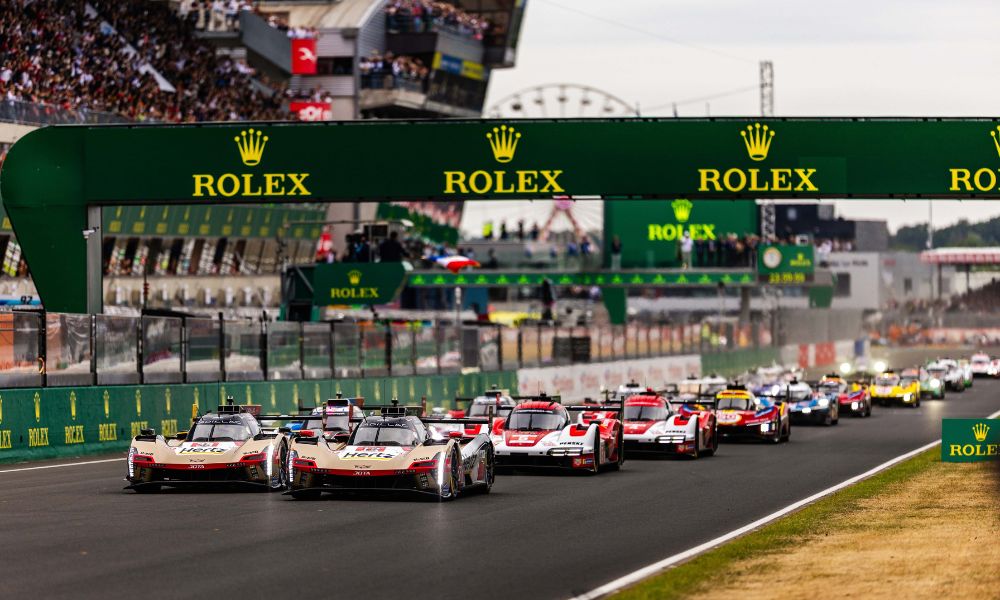
For decades, Grand Prix racing was regarded as the pinnacle of motorsport. If you wanted the biggest audiences, manufacturers and commercial opportunities, there was only one place to look.
I’m not sure that’s true anymore.
Formula One remains an extraordinary championship. But while motorsport has spent the last decade watching the series, something equally interesting has been happening in endurance racing. The difference is that it has happened without nearly as much noise.
What was once considered a niche discipline now has major manufacturers competing at the front, growing sponsor interest and record crowds. The racing itself is also probably as competitive as I can remember.
From where I sit, this isn’t a short-term trend. Endurance racing is going through a genuine renaissance, and Le Mans is at the centre of it.
People call Le Mans a 24-hour race, but that doesn’t do it justice. It starts with scrutineering in Place de la République the week before, and thousands lining the streets before the cars reach the circuit.
By race week, more than 350,000 people attend. The circuit becomes part race meeting, part festival, part manufacturer showcase, and increasingly a focal point for serious business to get done. And that last point matters.
The Monaco Grand Prix will always be one of the great events in world motorsport. But commercially, Le Mans offers something very different.
In my experience, you’re more likely to find yourself talking to a CEO or Chairman at Le Mans, rather than a content creator or influencer. That isn’t a criticism of other championships, it’s simply a different environment.
You spend days with people rather than minutes. Partners come into the garage, meet the engineers and mechanics, and experience the race through the evening and into Sunday morning – there is time to have meaningful conversations. In an increasingly transactional sponsorship market, I think that has enormous value.
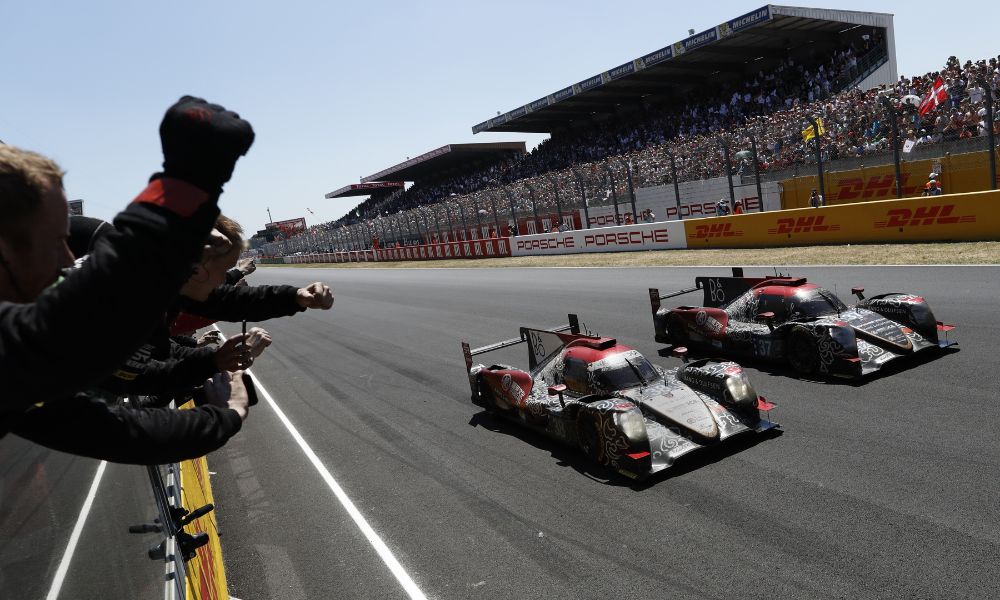
Jota has competed in the World Endurance Championship under various guises since 2016, pictured here as Jackie Chan DC Racing at the 2017 24 Hours of Le Mans (Image credit: Jota Group)
Racing for 24 hours
Outright speed is only part of the equation. You can have the quickest car and still lose. Preparation, reliability, strategy and decision making all matter. Often, the team making the fewest mistakes is still in contention on Sunday afternoon. That has always suited the way we think at Jota.
When we started, independent teams had to fight for every opportunity. We believed that with good people, the right culture and proper preparation, you could compete with organisations many times your size. The 2017 24 Hours of Le Mans is probably one of the best examples.
We were running Jackie Chan DC Racing in LMP2. We went there to win our class – nobody seriously expected an LMP2 car to fight for the overall victory, but Le Mans does strange things.
As the leading prototypes hit trouble, our Oreca kept going and eventually led the race outright for more than two hours. Porsche eventually recovered and passed us in the 21st hour. We finished second overall and won LMP2, just one lap behind.
This reinforced something we already believed. Le Mans doesn’t care how big your organisation is. Prepare well, surround yourself with good people and make the right decisions under pressure – then you have a chance.
Going beyond racing
Jota Advanced Engineering grew from applying the same problem-solving mentality to engineering challenges away from the circuit. Jota Composites takes knowledge developed around lightweight structures, materials and manufacturing into new applications.
That means taking expertise developed in motorsport into other demanding industries. From automotive to marine and aerospace, performance, weight, reliability and speed of development matter in equal amounts.
More recently, Jota Vision has taken thinking developed around race strategy and pit stop analysis and turned it into technology that helps teams understand performance and identify marginal gains.
They are different businesses but share the same origin. Motorsport develops people who are comfortable solving difficult problems quickly, and those skills remain relevant beyond the racetrack.
The interesting question is how far that expertise can travel. That is another reason I believe endurance racing is increasingly relevant to manufacturers.
Hypercar has also created close competition without making every car look the same. You can see Cadillac’s vertical lighting signature, BMW’s kidney grille or Ferrari’s silhouette and immediately know what they are.
And look at the Hypercar manufacturers involved: Cadillac, Ferrari, BMW, Toyota, Peugeot, Alpine, Aston Martin and Genesis, with Ford and McLaren coming.
At some point, you have to ask: if this many of the world’s major automotive manufacturers believe endurance racing matters, can we really continue treating it as motorsport’s second tier?
Rising to the top
Our own journey reflects that change. In 2024, Hertz Team Jota won the FIA World Cup for Hypercar Teams and our first outright Hypercar race at Spa. A year later, representing Cadillac, we locked out the front row at Le Mans, securing the first American pole position there since Ford in 1967.
Going from an independent team to representing one of the world’s great automotive brands says a lot about how both Jota and endurance racing have evolved.
The convergence between the World Endurance Championship (WEC) and the International Motor Sports Association (IMSA) SportsCar Championship strengthens the argument further. Manufacturers can compete across Daytona, Sebring and Le Mans with a global programme.
Formula One will likely always be motorsport’s biggest show. But biggest and best are not necessarily the same thing.
Endurance racing is a compelling alternative for both manufacturers pursuing engineering relevance, distinctive cars and global competition, and for partners wanting relationships that go deeper than impressions and hospitality numbers.
Winning still comes first. We are racers, after all. But what is being built around the racing is becoming much bigger. Le Mans remains the ultimate test of all three, and looking at where endurance racing is heading, I think its most interesting years may still be ahead of us.